Are there hidden costs in a commercial restroom cleaning contract in Greenwich?
There can be, and they rarely look hidden on the day you sign. They come from what a proposal leaves out. If the paperwork doesn't say who buys the soap, who refills the towels and what a visit outside the schedule costs, each of those can turn up later as a line on an invoice.
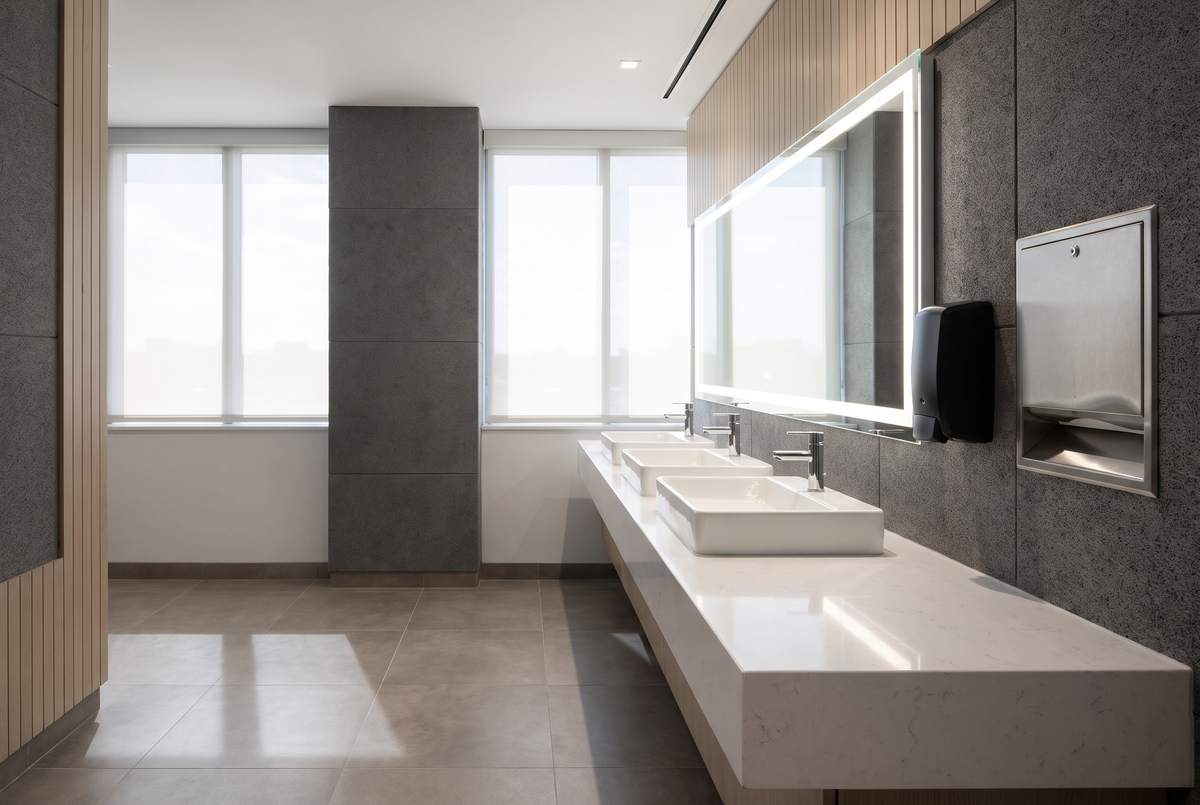
Restrooms are where it shows first. They use up supplies every day, and a missed clean is obvious to everyone who walks in. Way Beyond Cleaning is an owner-run cleaning company based in Fairfield, and restrooms are among the areas our recurring commercial cleaning can cover in Greenwich and across Fairfield County. Our Greenwich service area page covers the rest of what we do in town.
Where do the extra costs come from?
Five places. None of them is a trick. Each one is a line that a short proposal skips, and a skipped line gets priced later, when you have less room to say no.
| Line | What to ask | What happens if it's left out |
|---|---|---|
| Supplies | Who buys the soap, paper towels, toilet paper and liners? | Supplies show up as a separate charge you didn't budget for |
| Restocking | Does every visit include refilling each dispenser? | Refills become an add-on, or nobody does them |
| Extra visits | What does a visit outside the set schedule cost? | A one-off visit gets priced on the day, with no agreed rate |
| Deep work | Are grout, descaling and floor scrubbing in the regular visit? | Periodic work is quoted separately a few months in |
| Price changes | When can the price change, and with how much notice? | The rate changes at renewal on terms you never discussed |
Who buys the soap, paper and liners?
Settle this one first, because it's the cost that never stops. A cleaning contract can be written either way. The cleaner supplies everything and bills you, or you buy the stock and the cleaner refills from it. Both work. The trouble starts when the proposal says nothing.
It matters beyond the budget. OSHA's sanitation standard for permanent workplaces, 29 CFR 1910.141 in the Code of Federal Regulations, as it read in November 2026, says hand soap or a similar cleansing agent shall be provided, along with hand towels or air blowers convenient to the sinks, and that washing facilities shall be maintained in a sanitary condition. The rule is written for the place of employment, and Section 5 of the OSH Act, codified at 29 U.S.C. 654, requires each employer to comply with OSHA standards. So the duty stays with your business. The contract only decides who does the refilling, and it should say so.
Ask for three things in writing: who pays for each supply, who checks the levels on each visit, and what happens when something runs out between visits. If you're still deciding between an employee and a service, our post on in-house cleaners and janitorial services compares the two.
What does a visit outside the schedule cost?
A recurring contract prices the visits on the schedule. It may say nothing about the one you didn't plan, like the morning after a client event at your office.
Ask what an unscheduled visit costs and how you request one. Ask the same about any change to the schedule. If the answer is a rate, get the rate into the proposal. If the answer is that it'll be quoted at the time, you've learned that before signing and not after.
Is deep cleaning part of the regular visit?
A routine restroom clean and a deep clean are different jobs. The routine visit is the regular clean of fixtures, counters, mirrors, floors and bins. Scrubbing grout, descaling fixtures and machine-scrubbing the floor take longer, and a cleaner may price them as separate, periodic work.
Either setup is fine. What costs you is finding out in month four. Ask which tasks are in every visit, which are periodic, how often the periodic ones happen, and whether they're inside the price you were quoted. Our guide to what a commercial cleaning contract should include shows how to set a scope out area by area, so we won't repeat it here.
What should you check about price changes and terms?
Read the term, the renewal and the exit before you read the price. How long does the agreement run? Does it renew by itself? How much notice does either side give to end it? Then ask when the price can change and whether the change has a limit.
A minimum charge is worth a question too. If the restrooms need less work than expected, or you close for a week, does the monthly figure stay the same? You want to hear that answer from the cleaner before you sign, in writing.
Comparing restroom cleaning proposals in Greenwich?
Call (203) 872-5926 for a free estimate and a written proposal.
What changes for a Greenwich office or shop?
Who holds the cleaning contract differs from one Greenwich building to the next, and that decides which of the five lines are yours to settle.
A shop with its own restroom signs for the whole job, supplies included or not. A tenant in a shared office building may find the landlord already cleans the common restrooms. If that's you, read the lease before the cleaning proposal, so you don't pay twice for the same room. Our post on who cleans what in a multi-tenant office building goes through that split.
For a small office, the regular visit is the starting point. Recurring office cleaning starts at $150 per visit for a smaller office, and our office cleaning cost guide explains what moves a quote from there. It's a starting price, so check which of the five lines above are inside your own quote.
How do you use these questions with Way Beyond Cleaning?
The same way we'd tell you to ask anyone. Estimates are free, and the estimate comes as a written proposal. Restrooms, trash removal with liner replacement and high-touch points are among the areas a commercial scope with us can include. The schedule can be daily, several times a week, weekly or custom.
Bring the five questions from the table when you ask us for an estimate, and ask for the answers that matter to you in writing. You can read more about commercial cleaning and office cleaning in Greenwich, or ask for a free quote.